

Curating a Maximalist Home
My Personal Interior Design Retreat Through Fearless Curation

A 1984 Tract Home's Metamorphosis: When Modern Maximalism Meets Miami Suburbia
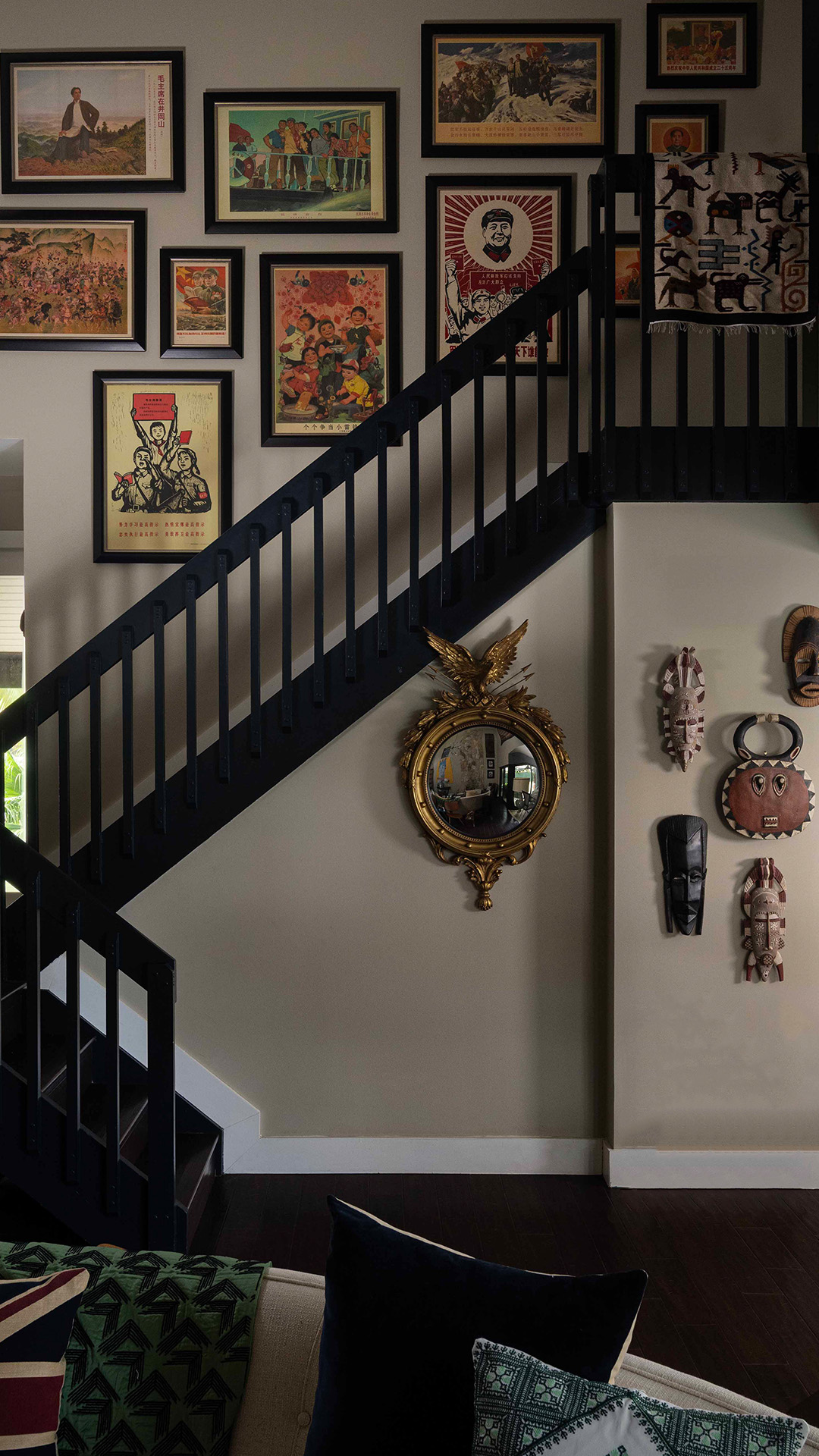
Built in 1984—that curious decade of angular ambitions and tract home dreams—this two-story residence in a quiet Miami suburb stood poised for my transformation. Not a teardown as I live in an association-deeded community. My parameters had been pre-set! Ay! As such, I sought something far more poetic: its next chapter would need to unfold on the inside. What an unexpected moment this could be for guest entering my home! My creative gears were in overdrive! I wanted to be able to tell my story in pattern and color, in vintage treasures that I’d been collecting for decades, and with modern touches, in the language of modern American maximalism.
The Foundation: When Good Bones Meet Dreamy Layout
The bones were strong. The layout checked all the boxes. These aren't marketing platitudes—these are the conditions every interior designer prays for, the foundation upon which maximalist magic can truly build.
A double-height living room soared with theatrical possibility, begging for drama, demanding layers of art, insisting on a boldness of curation. An owner's suite occupying the entire east side of the house—not carved into fractured spaces but gloriously expansive—captured my heart the moment I saw it. Admittedly, I was seeing this house from 3,000 miles away as I was still living in Los Angeles. I was preparing to move in a few months and this home became available in the same neighborhood I grew up in. Somehow it already felt special.

Design Philosophy: Looking to the Past, Living in the Present
I approached this Miami interior design project, my own personal home, with a dual consciousness: looking to the past for inspiration while infusing modern touches for balance. It was a homecoming that allowed me to showcase 20 years of being away. For me this is the essence of modern American maximalism—not period revival, but a balance of nostalgic recreation and forward expression. Something distinctly contemporary that honors history's boldness, its abundance, its refusal to whisper when it could sing while still feeling timeless and current.
Modern Victorian Interior Design: The Perfect Synthesis
Victorian sensibilities became my North Star: the fearless pattern mixing, the layered textiles, the sculptural furniture, the collected elements elevated to art form, the belief that every surface deserves consideration and every corner tells a story. But I filtered these impulses through a modern lens—contemporary comfort, current color theory, today's global access to treasures from every continent and era.
The result? Not Victorian revival. Not modern minimalism. Modern Victorian—my signature approach where past and present don't just coexist but elevate each other into something neither could achieve alone.
Total Interior Transformation: Designing Every Square Inch
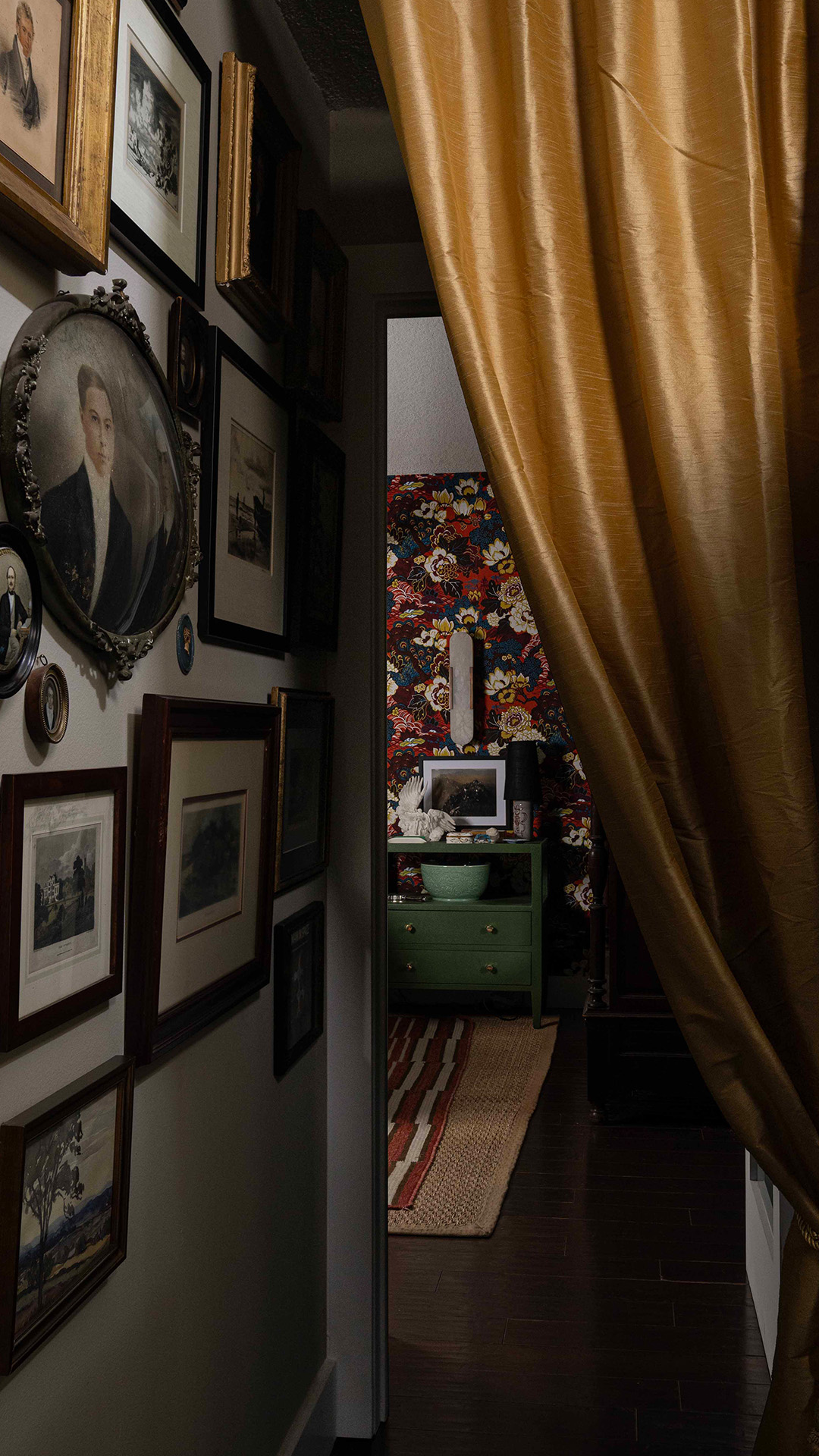
As this was my home, I designed every square inch of the home. Not just the "public" spaces. Not just the rooms guests see. Every. Single. Inch.
Because modern American maximalism doesn't believe in throwaway spaces, in rooms that don't matter, in corners that can wait. The powder room deserves as much consideration as the living room. The hallway is an opportunity, not an afterthought. Closets can be beautiful. When you approach design as holistic poetry rather than selective decoration, every space becomes a verse in a larger epic.
Spotlight Spaces: Where Maximalism Shines Brightest
The Double-Height Living Room: Vertical Drama and Layered Design
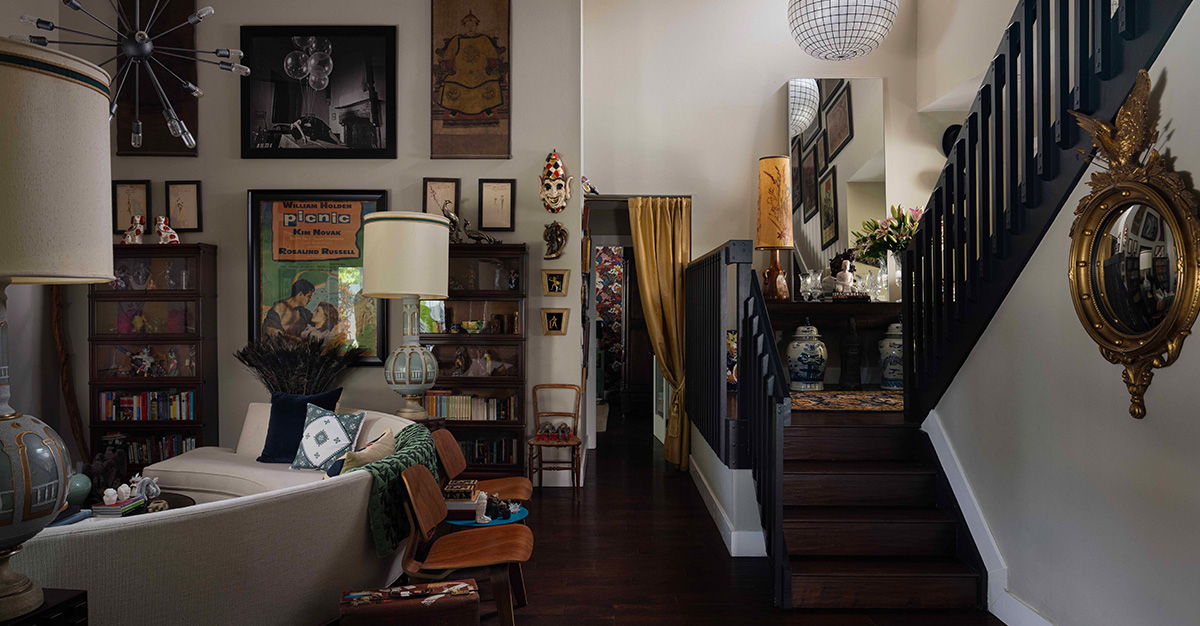
That soaring double-height living room became my canvas for vertical storytelling. I layered art at multiple elevations, creating gallery walls that climb toward the ceiling, guiding the eye upward while grounding the space below. The collection was eclectic. An oversized, oil on canvas from a favorite artist from New Orleans sits beneath a vintage canvas of King George VI. On a larger wall rests a vintage American flag with only 46 stars. Rare in that it was only used for 4 years. Tall, Globe Wernicke bookcases embrace the height rather than cowering from it. A 1960s sputnik chandelier anchors the room.
But maximalism isn't just about filling up. It's about creating rhythm, establishing focal points, building visual pathways that lead you through the space. Against bold moments I introduced breathing room. Between saturated colors I allowed neutral passages. This is the discipline that separates curated abundance from chaotic accumulation.
The Main Bedroom: An Entire Wing Reimagined
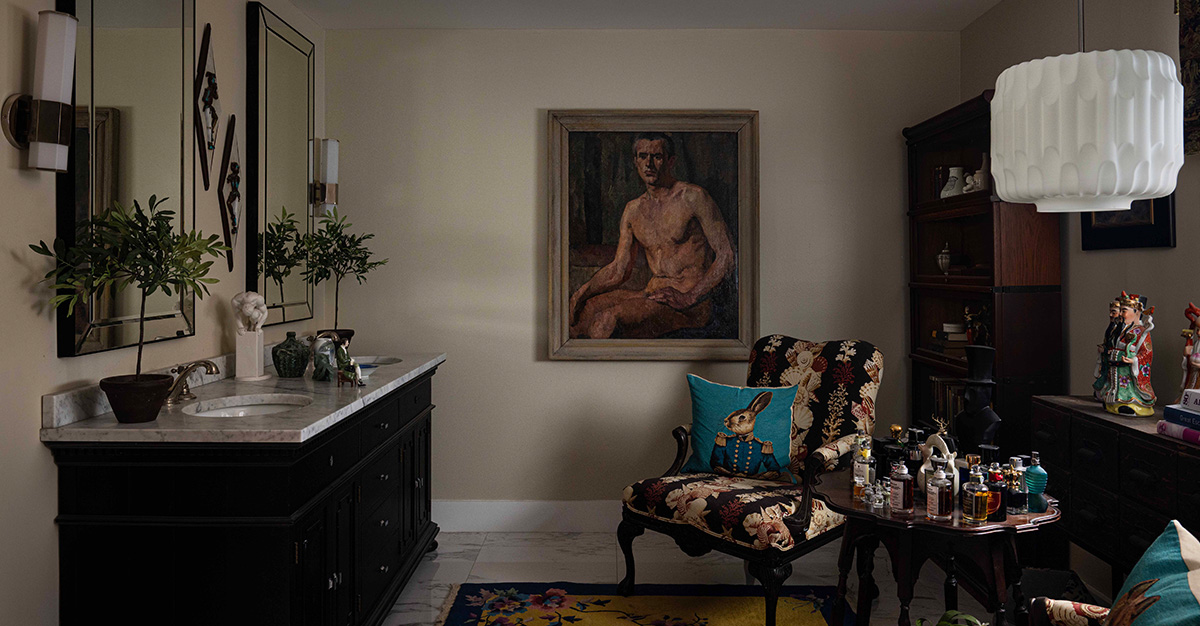
With the whole east side of the house dedicated as my bedroom, I had room to create not just a bedroom but a private sanctuary—a suite in the truest sense. Bedroom, sitting area, closet, bath—each zone received its own design identity while contributing to a cohesive narrative.
I treated this wing as a home within the home, where pattern could intensify, where personal collections could display more intimately, where the vintage British armoires sit alongside a strikingly modern four-poster bed in a primary yellow color. This is where maximalism becomes most personal—not performing for guests but creating a personal story.
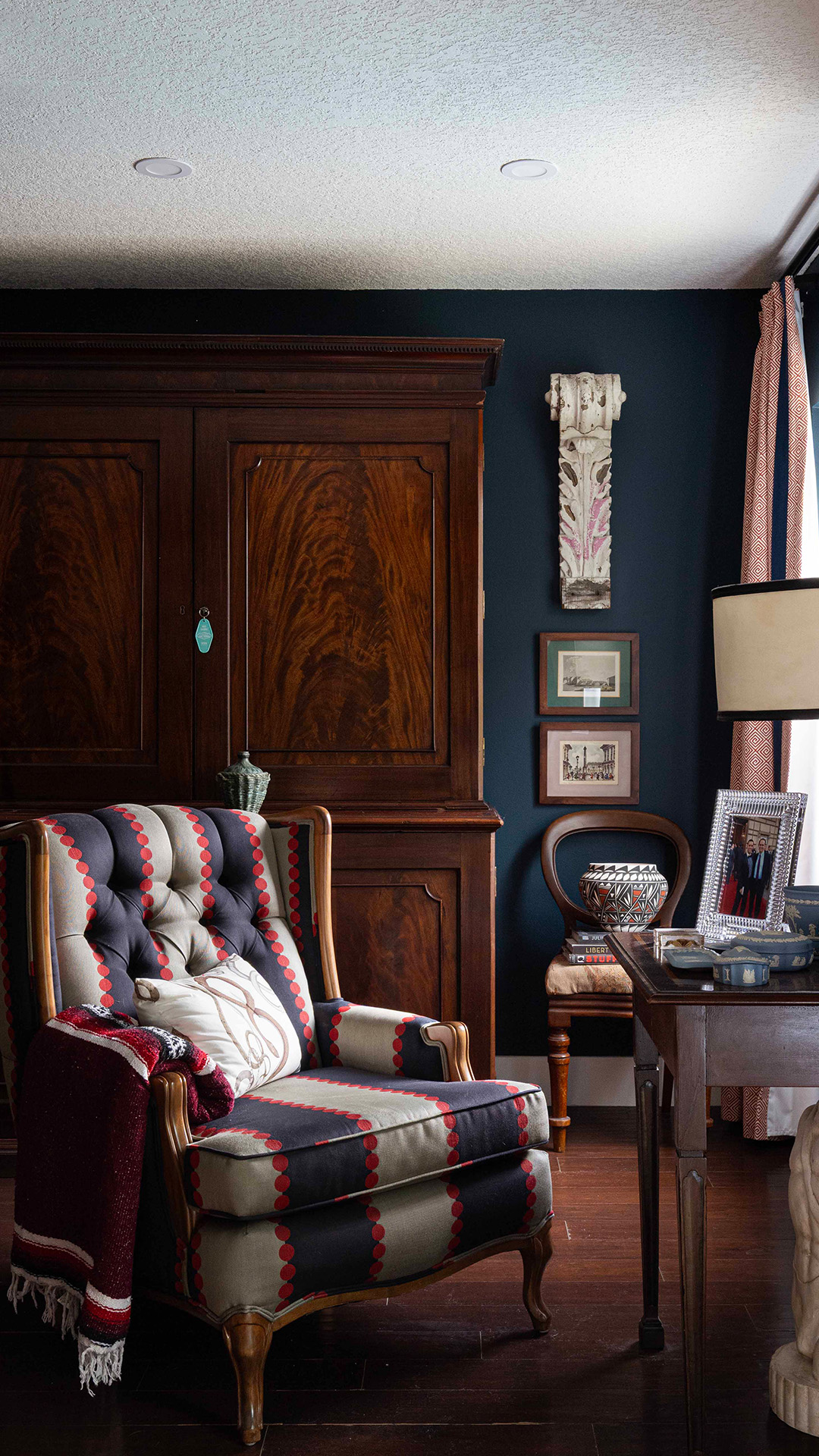
I wanted the walls a dark and moody color. I opted for Farrow & Ball's Hague Blue. It sets off the vintage 19th century armoir in my reading nook. The armchair is a vintage piece from my godmother who had it in her possession for over 60 years. I had it reupholstered in a Jonathan Adler fabric.
The Modern Victorian Approach: Perfecting the Eclectic Mix
The end result is my truly modern Victorian approach—that synthesis I've spent years perfecting, that philosophy I've tested across dozens of projects, that aesthetic I believe represents the future of American interior design.
Elements of Eclectic Interior Design Done Right
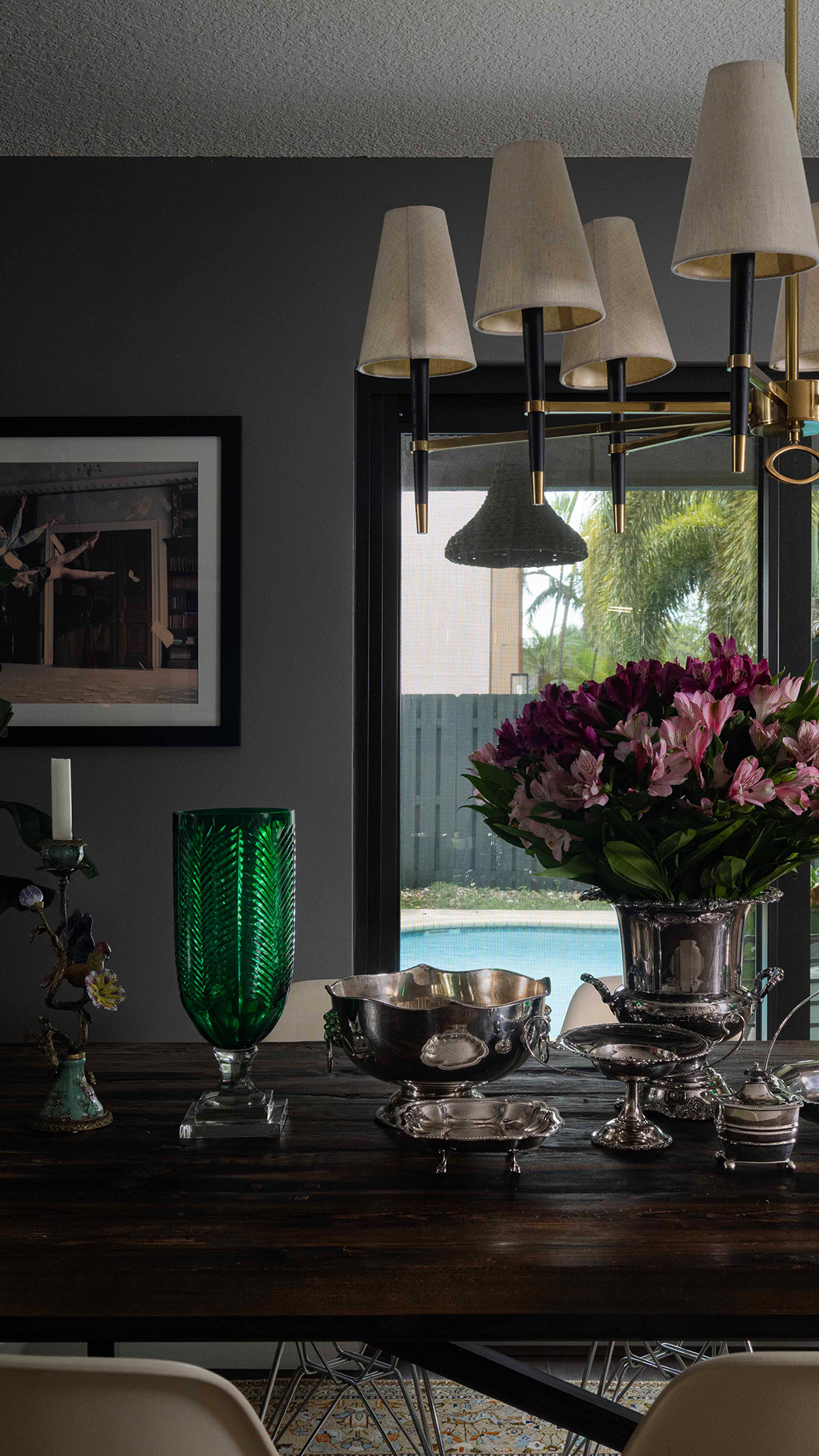
I layered together an eclectic mix of elements with surgical precision:
- Victorian armoires
- Mid-century bookcases
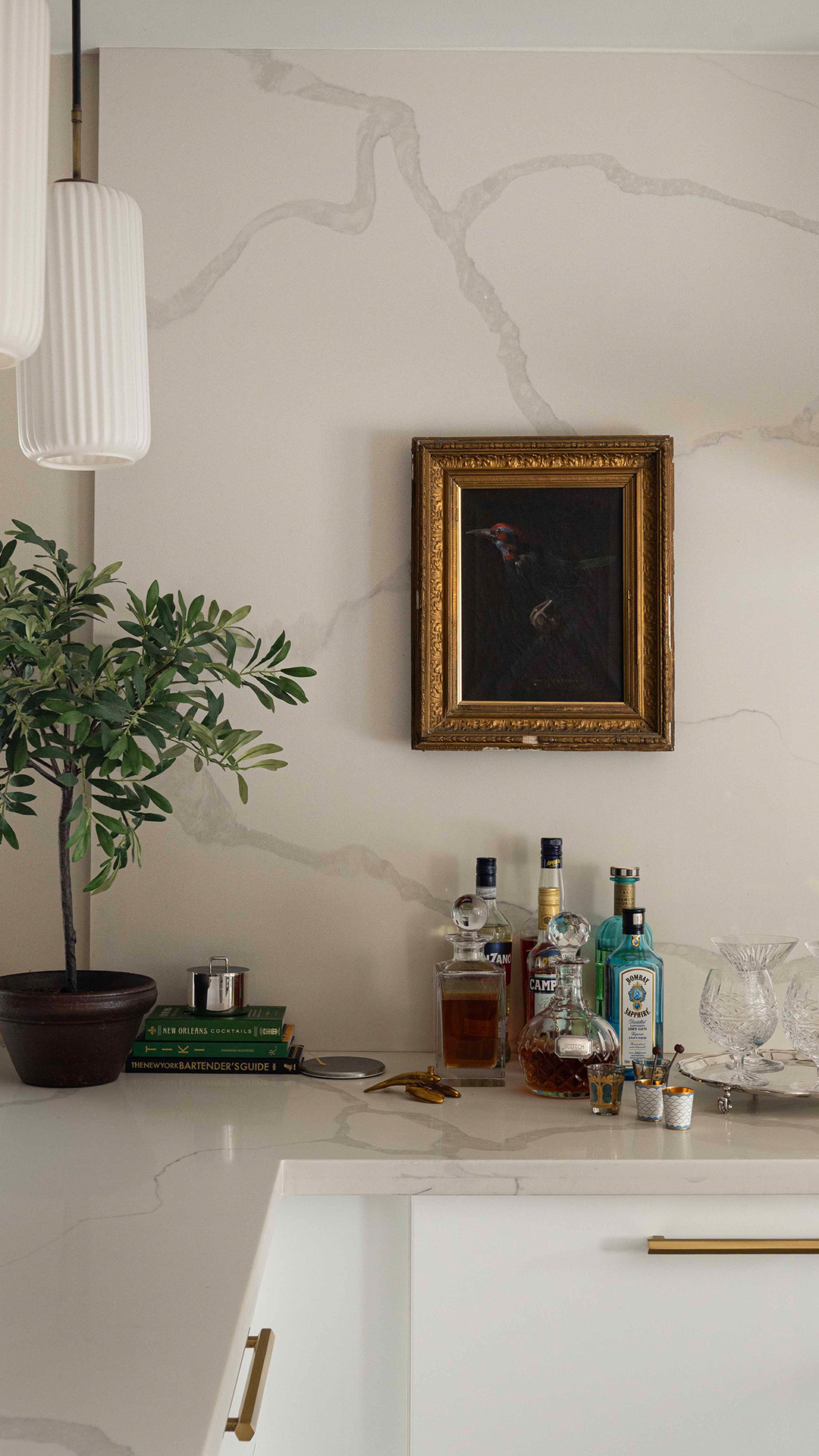
- British and French Flea market paintings alongside modern, emerging artists' work
Each element chosen not for its era but for its ability to contribute to the whole. This is eclecticism as craft—understanding that "mix" doesn't mean "random," that layering requires strategy, that abundance without editing becomes oppressive rather than liberating.
Modern American Maximalism: The Suburban Edition
This 1984 tract home in a quiet Miami suburb now stands as my manifesto: modern American maximalism belongs everywhere. Not just in historic neighborhoods or luxury high-rises. Not just for the wealthy or the urban. Everywhere people live, maximalism can thrive—bringing joy, celebrating personality, proving that homes should reflect the richness of the lives lived within them.
I designed my home to challenge every assumption about suburban design—that it must be neutral, that it should match the neighbors, that tract homes can't hold bold vision. Those assumptions are lies told by people afraid of color, pattern, vintage treasures, and the eclectic spirit that defines the best of American design.
Explore more of my maximalist retreat
ready to discuss your project?